Firm
Clear expectations, clear targets. Pupils walk into the studio knowing exactly what they are aiming for, which frees them up to concentrate on the making.
Section 03
Lede 001
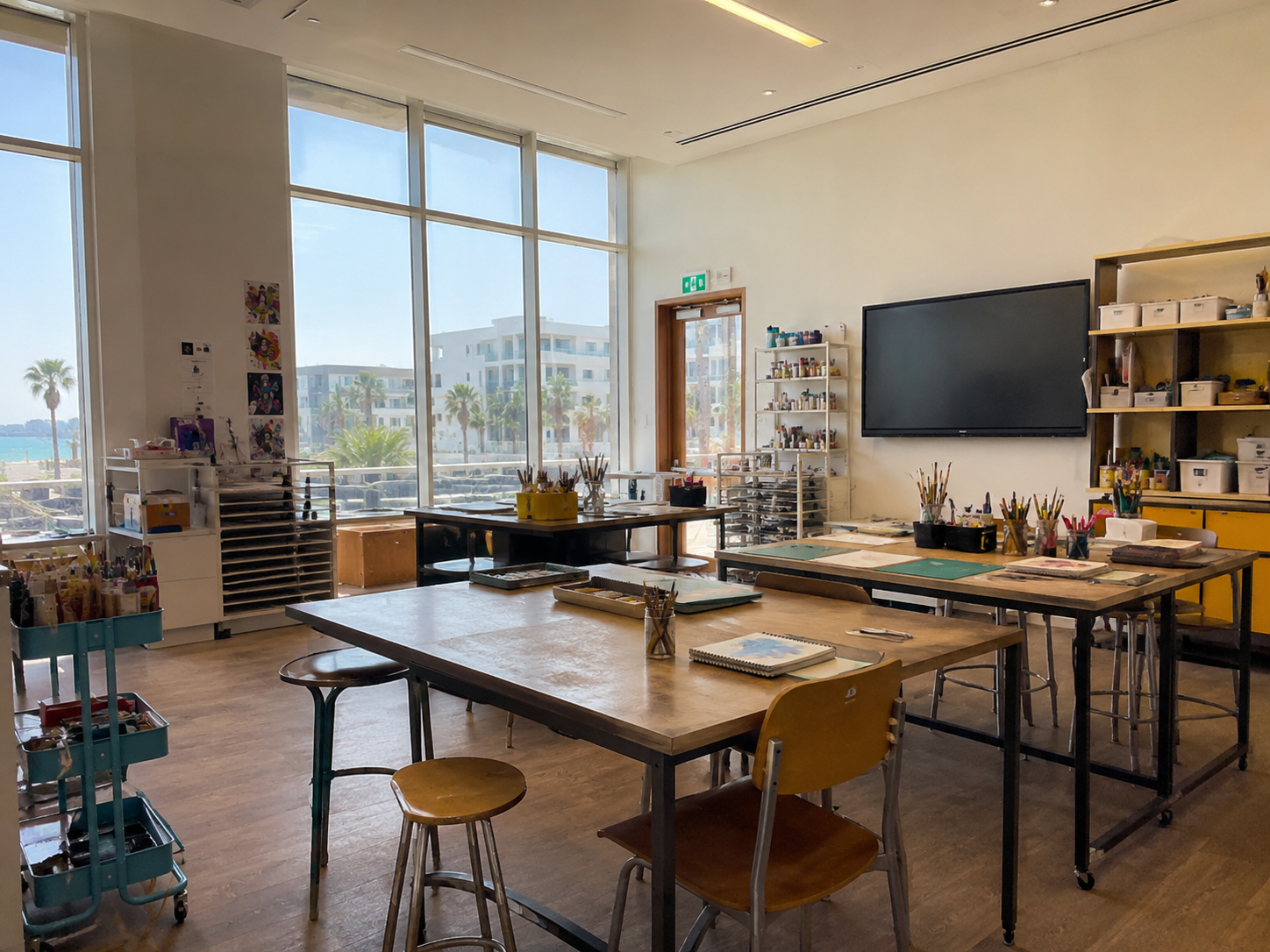
I believe teaching creative subjects is about creating a safe and fair environment where pupils can walk into the studio and understand their target. From there, making mistakes and learning hands on with the teacher is the main focus.
Principles 002
Clear expectations, clear targets. Pupils walk into the studio knowing exactly what they are aiming for, which frees them up to concentrate on the making.
Everyone gets what they need to succeed, not the same thing regardless of need. Being fair is how I build the relationships that lead to outstanding outcomes.
A studio should be somewhere people want to be. Energy, conversation and mess are part of it, and so is laughing when something goes wrong.
Flexible scaffolds, clear steps and visual instructions mean every pupil can access the same task at their own pace and still reach the same amazing outcome.
Mistakes are part of the learning process. Working hands on alongside the teacher, getting something wrong and fixing it, is where most of the progress happens.
Materials matter. Paper weight, brush choice, the sharpness of a pencil. These are not aesthetic preferences, they are teaching decisions.
Curriculum 003
Two components across Years 10 and 11: a Portfolio (Component 1, 60%) built from two sustained projects, and an Externally Set Assignment (Component 2, 40%) with a 10-hour supervised final piece. Assessment tracks the four AOs of develop, refine, record and present, through sketchbook work, artist studies, workshops in drawing, painting, print and mixed media, and a mock exam in the spring of Year 11.
Component 1, Personal Investigation (60%) is a student-led body of practical work plus a 1000–3000 word personal study, developed through weekly tutorials from the second half of Year 12. Component 2, Externally Set Assignment (40%) opens on 1 February of Year 13, with a preparatory period followed by a 15-hour supervised final outcome. Emphasis on contextual research, sustained sketchbook practice, and exhibiting work for moderation.
Three assessed tasks over the two-year DP: Comparative Study (20%), a 10–15 screen analysis of at least three artworks from different cultural contexts; Process Portfolio (40%), 9–18 screens (HL) or 9–13 (SL) evidencing experimentation across at least three art-making forms; and the Exhibition (40%), a curated show of 8–11 (HL) or 4–7 (SL) resolved works with a curatorial rationale. Delivered as three distinct authorial voices: writing, making, curating.
Short Course and Personal Progress modules delivered as a rolling programme of credit-bearing challenges of sensory materials, printmaking, textile and clay work, community-facing outcomes. Every session is designed so a student can enter at any point and leave with something made, however small. Progress is evidenced through photography, video and portfolio pages rather than written response.